• Font Size    
E-mail

Close Window E-mail This Page

The Blizzard Of 1999: 21.6 Inches Of Misery

Required fields are marked with an asterisk(*)


The information you provide will be used only to send the requested e-mail and will not be used to send any other e-mail communications. Read more in our Privacy Policy

Send E-mail

   Print     Share +   

The Blizzard Of 1999: 21.6 Inches Of Misery

Snowstorm Set Record For 1-Day Snowfall, Second Largest Snow Total In Chicago History

 Video Library

CHICAGO (CBS) ― In the Chicago area, a winter storm is usually seen as a nuisance rather than a cause of panic.

Often, if even as much as a foot of snow falls, schools remain open, streets remain crowded, the primary concern on many Chicagoans' mind is what lawn furniture they can find to protect their parking spaces after digging them out.

But Chicagoans were hardly prepared for the snowstorm that walloped the city and the entire upper Midwest on New Year's weekend 1999. The storm left 21.6 inches of snow on the ground -- the second largest total in Chicago history – and made any activity other than staying home a miserable experience.

The snowstorm blew in on New Year's Day, and on Saturday, Jan. 2, it dumped 18.6 inches of snow on the ground –- the greatest single-day snowfall ever recorded in Chicago.

Mayor Richard M. Daley said it was in all Chicago residents' best interests just to stay inside.

"This weather is extremely dangerous," Mayor Daley said at a Jan. 2, 1999, news conference. "We urge all Chicagoans to stay indoors if at all possible, avoid unnecessary travel, both for your own safety and to make it easier for our plows to do their work."

But not everyone had that option, and for those who were walking, let alone driving, 1999 was not turning out to be a very happy new year.

Winds gusted at more than 60 mph, creating an eerie scene of shadows struggling through a cloud of whipping snow. Trees rocked, flags whipped, dumpsters were toppled, and those who dared to enter out were slapped and pelted in the face.

"When I'm walking, I can't even see," Chicago resident Bob Daniels told CBS 2's Dorothy Tucker. "It's literally stinging my eyes."

Driving was downright dangerous. Cars skidding along the streets were a common sight.

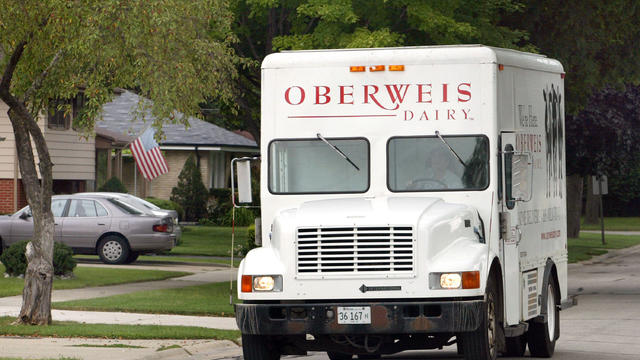
And work of any kind was a challenge –- every task from maneuvering a stretcher into an ambulance to something as simple as delivering a pizza. On Jan. 2, that was too much for pizza deliveryman Juan Español, who decided to call it quits for the day at 1 p.m.

"It's just too hard," he said. "It's just too hard to drive and maintain the pizza hot."

Even those who stayed home had to concern themselves with porches and sidewalks that needed to be shoveled, and tens of thousands of ComEd customers lost power, although the vast majority had power restored within the day.


City Goes All Out To Fight Snow
The snowstorm was often compared to the infamous blizzard of Jan. 13, 1979. That blizzard actually dumped less snow in total than the 1999 blizzard –- only 18.8 inches -- but that was on top of 7 to 10 inches that had fallen in a New Year's Eve snowstorm. Then Mayor Michael Bilandic's failure to clear streets and keep the city moving in that blizzard led him to lose his bid for reelection to Jane Byrne the following month.

By 1999, that snowstorm was 20 years in the past. But city officials had not forgotten the lessons learned.

Mayor Daley held a news conference on Saturday, Jan. 2, with every city department head. He vowed that city workers would not stop plowing, salting and fighting the weather until the snow stopped coming down.

More than 700 snow plows and salt trucks were dispatched, and the city even brought in private contractors. But the snow was falling much faster than they could keep up.

"It's unbelievable – the plows plow, salt, and as you can see the drifts keep coming back," said Eileen Carey, then the commissioner of the city Department of Streets and Sanitation.

CTA buses and 'L' trains ran normally, but with severe delays. Lake Shore Drive was shut down altogether for the first time in history, and Interstate 65 in Northwest Indiana was also closed.

The Fire Department had to take extra precautions with ambulances and fire trucks.

"We've made some strategic changes to our response program," said then-Fire Commissioner Edward Altman. "With all ambulance responses, we'll have a fire suppression unit along with them, in case somebody has to be carried long-distance or if the ambulance should get stuck."

Both O'Hare and Midway international airports remained open throughout the storms, but 75 percent of flights were canceled. With many people coming home or returning to school, it made for monumental frustration.

On Sunday Jan. 3, the snow finally tapered off. Lake Shore Drive reopened that afternoon, and the outdoors began to seem less forbidding. But the battle against the blizzard was hardly over.

Schools Closed 2 Days As City Digs Out
By Monday, Jan. 4, the snow had stopped falling, but arctic cold had settled over the area. Wind chills of -25 were slapping Chicagoans in the face as they attempted to dig out their cars.

The process of digging out had begun on Sunday as the snow subsided. Cars were fully buried all across the city, and those who succeeded in digging out and driving off would not leave without putting out chairs or lawn furniture to protect their spaces.

Chicago Public Schools and Roman Catholic schools shut down on both Monday, Jan. 4, and Tuesday, Jan. 5. Even if students had wanted to go to school, in many neighborhoods they would have had a hard time getting to the front door.

Sidewalks were left unshoveled and impassable, and snowdrifts blocked crosswalks.

"You're really running the risk that you're going to have children walking in the streets, walking between cars, and it's a very dangerous situation," said then-Chicago Public Schools chief executive officer Paul Vallas.

Schoolchildren couldn't have liked the idea more, but working parents were concerned.

"That's dangerous. I wouldn't want my kids walking in the street, because if the cars can't stop for that, they might hit the kids," said mother Mary Mocodeanu.

The process of digging out was so harrowing and took so much time that schools had to remain closed on Tuesday.

Many colleges and universities resumed classes as usual, but lecture halls were hardly filled to capacity. At the University of Chicago, some dormitory resident heads said less than half of their students had returned, the student newspaper the Chicago Weekly News reported on Jan. 7, 1999.

Airport traffic began picking up again, but not without complaints. Planes took over an hour to land in many instances, and baggage claim lines at both O'Hare and Midway was "so clogged that finding luggage was about as easy as finding Waldo," writer Jacob Gershman wrote in the Chicago Weekly News.

Ultimately, the snowstorm ended up smothering much of the upper Midwest and southern Canada. In the Chicago area alone, the snowstorm was blamed for at least 43 deaths, from heart attacks while shoveling snow, exposure to cold, and other factors.

Since then, there have only been three snowstorms with 10 inches of accumulation or more –- in February 2000, January 2002, and January 2005, according to the National Weather Service. 

Video Library
  1999 Blizzard Leaves City At Standstill
  City Goes All Out To Fight Snow In '99 Blizzard
  1999 Blizzard Puts Damper On Couple's Wedding
  O'Hare Nearly Shut Down In 1999 Blizzard
  Blizzard Of '99 Extends Schools' Winter Break
  '99 Blizzard Requires Major Dig-Out
  Icy Cold Follows '99 Blizzard; Schools Out 2 Days
  A Look At City Plow Drivers In The '99 Blizzard


cbs2chicago.com's Most Popular Pages
 Slideshow: Most Popular Videos Of 2007
 Slideshow: Newsmakers Remembered 
 Slideshow: 12 Days Of Christmas: CBS 2 Morning News Style
 Slideshow: They Really Said It! Quotes From Celebrities In 2007
 Slideshow: 90s TV Stars Then And Now
 Slideshow: What A Way To Go
 Slideshow: In To Be Out: Gay Celebrities
 Slideshow: Did You Know? Stars From Chicago!

(© MMIX, CBS Broadcasting Inc. All Rights Reserved.)

You need the latest Flash player to view video content.
Click here to download.

Click here to bypass this detection if you already have the latest Flash Player.