• Font Size    
E-mail

Close Window E-mail This Page

How To Be Safe In A Tornado

Required fields are marked with an asterisk(*)


The information you provide will be used only to send the requested e-mail and will not be used to send any other e-mail communications. Read more in our Privacy Policy
Send E-mail

   Print     Share +   

How To Be Safe In A Tornado

CHICAGO (CBS) ― In the decades that they have stood sentinel around the city, the air raid sirens have been known better for announcing a White Sox pennant win in 1959 than for any actual emergency situation.
But on Monday night, for only the second time in two years, the city Office of Emergency Management sounded them. A tornado warning had been issued in Cook County, and some people reported seeing funnel clouds nearby. Those attending a Cubs-Astros game at Wrigley Field ducked into the concourse.

That served as a reminder for many that despite widespread claims to the contrary, a tornado can touch down in Chicago.

"It is rare (for warning sirens to go off in the city), but we have to be careful. We do try to act out of an abundance of caution," Kevin Smith of the Office of Emergency Management and Communications said in September 2006, when another tornado warning struck the city. "There's a lot of misunderstanding about tornadoes. People think that they don't hit in the city, but it is very possible for them to hit in the city – they have in decades past – and they can do a lot of damage."

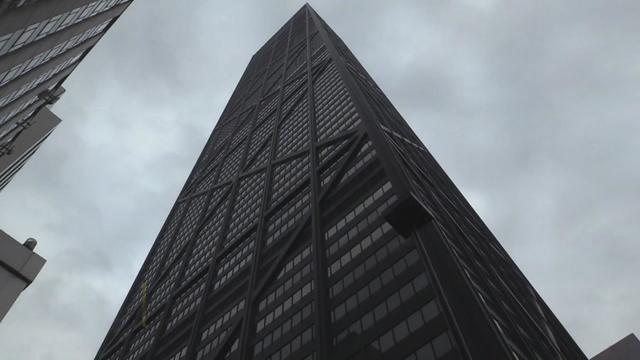
Among the misconceptions about tornadoes are that the tall buildings or the lake will stop a tornado, or that cities create heat islands that stop small tornadoes. But major tornadoes can, and have, hit big cities in the distant past.

CBS 2's Steve Baskerville pointed out after the tornado warning two years ago that most funnel clouds do not touch the ground. But that chance is not worth taking.

"The possibility of a tornado is just as great in downtown Chicago as it is in our rural counties," Jim Stefkovich, a meteorologist for the National Weather Service, told CBS 2 in 2003.

Since records have been kept, a tornado has touched down on average of once a year in the Chicago area. In 1876, an F3 tornado slashed through the heart of Chicago, tearing buildings apart, killing two and injuring 35.

In April 1967, an F4 tornado with winds clocked at more than 200 miles per hour carved a path of destruction from Palos Hills to 95th Street in Oak Lawn.

The worst tornado in the Chicago metropolitan area hit Plainfield and Crest Hill on Aug. 28, 1990, killing 29 people and injuring hundreds. Click here to learn more about the Plainfield tornado of 1990.

If a tornado warning is announced in your area here are some precautions you can take:

In a home
Do not crack the window trying to equalize the air pressure, because more people are hurt standing there by flying glass trying to figure all that out. The basement is the safest place to be. If there is no basement, head for a windowless bathroom or the most interior part of the house you can find.

In a high-rise
If you're in a high-rise, get away from the windows. Head for an interior hallway, or go to the basement.

In a car
Don't try to outrun a tornado. Get out of the car and seek shelter. If shelter is not available, lay face down in a ditch until the storm passes, but don't go into an underpass. Wind-bearing debris accelerates as it passes through; you're likely to blown away.

In a large room
And if you're caught in a very large room like a gymnasium or a grocery store, go to the corner. Walls have more support in the corners than in the middle.

"Don't think it won't happen to you," Stefkovich said. "If you hear the sirens going off, don't call 9-1-1. Take action. Protect yourself."

In the city of Chicago there are 112 Civil Defense sirens in six zones ready to warn residents of severe weather. If they go off as they did Friday night, it means only one thing: take cover!!!!

Also, it is a good idea to have items necessary in an emergency at the ready. Among the most important ones are a water supply, a first-aid kit, a flashlight with extra batteries, and weather radio to keep up to date. They can be kept in the basement in the room used to seek shelter.

 Click here to see Steve Baskerville's special report on tornado safety from May 21, 2003 (opens in a separate window)

(© MMVI, CBS Broadcasting Inc. All Rights Reserved.)

You need the latest Flash player to view video content.
Click here to download.

Click here to bypass this detection if you already have the latest Flash Player.