May 15, 2006 11:00 pm US/Central
Behind The Secret Sect Of Opus Dei
by Antonio Mora
CHICAGO (CBS) ―
The Catholic Church's most controversial group is the villain at the center of Dan Brown's "The Da Vinci Code." But what's the truth behind Opus Dei?
The group has some 85,000 members worldwide and 3,000 in the U.S. CBS 2's Antonio Mora reports 800 of them live in Chicago, where Opus Dei got its American start almost 50 years ago and where it still has a powerful presence.

A powerful mysterious cult sends a masochistic albino monk to murder anyone who might reveal a centuries-old secret that could destroy the church. The killer cult is "The Da Vinci Code's" version of Opus Dei.
"'The Da Vinci Code' is a mystery thriller," said Opus Dei spokesman Frank Hoffman. "It uses exaggerated figures I think for excitement, but that's not what Opus Dei is."
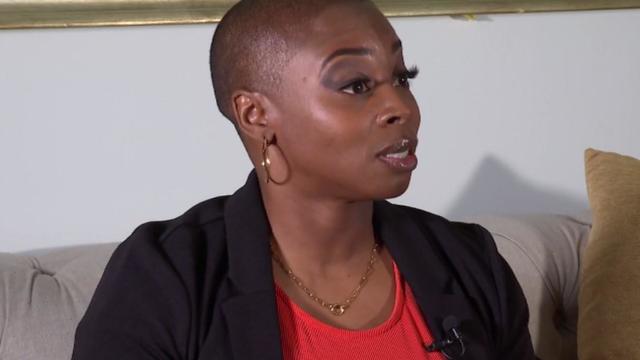
Opus Dei prefers we see the group through Patti Lechner, a mother of six from Northbrook who joined, attracted by the group's message of finding holiness in everyday work and life.
"My experience with Opus Dei has shown me the tremendous love God has for all of us," Lechner said.
About 80 percent of the group's members are supernumeraries like Lechner.
They attend regular prayer circles and daily mass, but otherwise lead ordinary lives, marrying and having kids.
A few members are priests, and then there are the numeraries -- lay men and women who make pledges of celibacy, chastity and poverty and who live in single-sex residences.
This is where Opus Dei gets most controversial.
"Once you're in the group, they demand total obedience," said Tammy Di Niccoli with the Opus Dei Awareness Network (ODAN).
The ODAN accuses the group of aggressive recruiting and alienating numeraries from their families.
"It's hard to understand how a group can capture someone's mind, but it can happen because it's a very subtle process," Di Niccoli said.
"I haven't found any brainwashing. Maybe I am brainwashed. I'm a Cubs fan if that counts for anything," Hoffman said.
Then there's the issue of corporal mortification. Numeraries are expected to flail themselves weekly for about 30 seconds with a small whip called a discipline and to wear a small, spiked chain called a cilice for a couple of hours a day.
"I wouldn't call it painful. I would call it uncomfortable," Hoffman said. "Corporal mortification is something legitimate. It's something the saints have done."
Critics also say Opus Dei is unusually secretive.
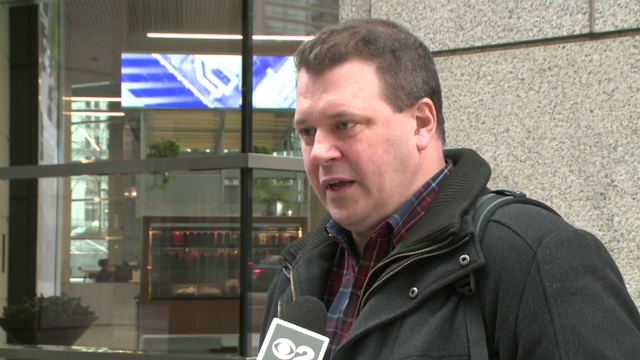
"I really don't get this emphasis on privacy. I've never understood it. I've studied the group for the last 10 years and it still strikes me as a little odd," said Fr. Martin.
Opus Dei is very conservative and that's made it a favorite of popes. John Paul II quickly canonized its founder, Jose Maria Escriva.
In Chicago, Opus Dei runs St. Mary of the Angels and is credited with saving the church and revitalizing the parish.
Hundreds of inner city kids in Chicago and Waukegan benefit from Opus Dei tutoring programs.
The group runs Lexington College for Hospitality downtown, and it's heavily involved in various elementary and high schools in the city and suburbs.
It's all a far cry from "The Da Vinci Code."
"Dan Brown's portrayal of them is completely irresponsible and really reprehensible, and this is coming from me, who's been something of a critic of the group in the past," Martin said.
"I've always derived great joy from being in Opus Dei. That's why I'm in Opus Dei," Lechner said.
Opus Dei, which is Latin for "Work of God", is is influential at the Vatican and in a number of governments around the world.
Here in the United States, Supreme Court Justices Scalia, Thomas and Roberts reportedly have strong ties to the group, as does Senator Rick Santorum.
If you'd like to learn more about Opus Dei, watch Eye on Chicago this Sunday at 10:30 a.m.
In "Cracking the Code" on Tuesday at 10 p.m., we'll focus on whether the central themes of "The Da Vinci Code" are history or heresy.
(© MMVI, CBS Broadcasting Inc. All Rights Reserved.)
Comments