Oct 7, 2009 6:09 pm US/Central
Fight At Fenger While Officials Discuss Violence
Activists Say Violence Against Students Spiked After School Plan Started
CHICAGO (CBS) ―
-
-
U.S. Education Secretary Arne Duncan arrives at the Four Seasons Hotel, 120 E. Delaware Pl., for a discussion on combatting violence among Chicago youth.
CBS
President Barack Obama was so shocked by the deadly beating of a Fenger High School student that he dispatched two members of his cabinet to address the problem.
But on the day
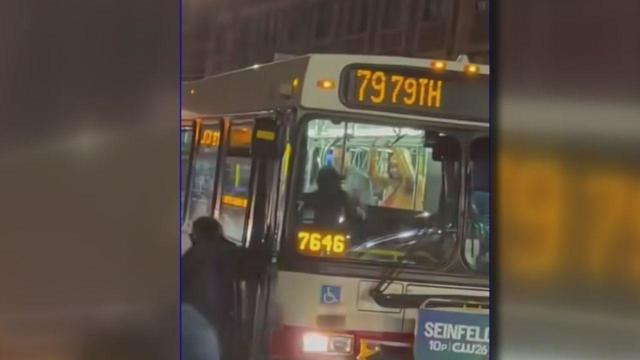
Attorney General Eric Holder and Education Secretary Arne Duncan met with local officials to discuss youth violence, there was another fight at Fenger.
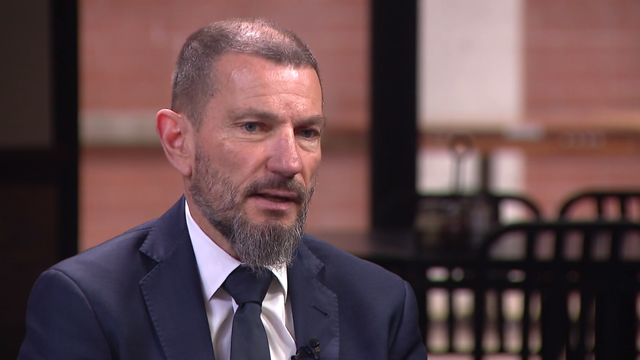
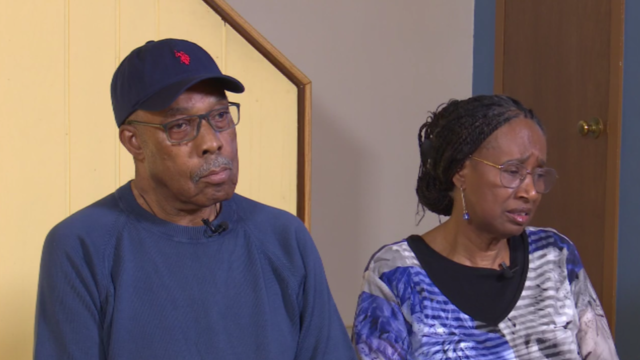
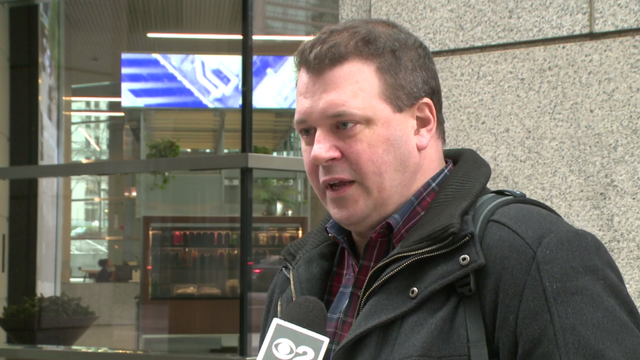
As CBS 2's Mike Puccinelli reports, students said what happened Wednesday is typical of what happens every day. Students from Altgeld Gardens got into a fight with students who live in the area surrounding the high school, an area known as "The Ville."
Students and other Far South Side residents were protesting Wednesday outside the mayor's office on the fifth floor of City Hall and at Altgeld gardens.

They were trying to add their voices to what Holder and Duncan called a national conversation on student violence.
Altgeld Gardens resident Tommie McCoy said Holder and Duncan should have visited Fenger and Altgeld Gardens, not just met with Mayor Richard M. Daley and other local officials in downtown Chicago.
"I think they should have come out this way instead of downtown because this is where it's happening at out here," McCoy said.
If Holder, Duncan and Daley had been outside Fenger on Wednesday when school let out, students said they would have gotten an eyeful.
"They was fighting," one girl said.
Another student said, "Some boys they got off the bus fighting and that. Then the police came over there breaking up the fight."
As soon as the punching stopped at Fenger, the students and the simmering tension moved south to Altgeld Gardens a few miles south.
Protesters shouted "We want Carver back. We want Carver back."
During the protest in Altgeld Gardens, police called in reinforcements because one officer claimed the crowd was becoming hostile and unruly.
The students and adults said they have a single mission: to get Carver High School turned back into the community high school for Altgeld Gardens.

Although Carver is located in the Altgeld Gardens area, three years ago it was changed into a military school with selective enrollment. That forced many students who live in Altgeld Gardens to travel five miles north to Fenger. Many students said that decision made their lives hell.

Luevinne Leggett, a senior at Fenger, said she doesn't feel welcome there.
"I don't feel welcome because I get chased home from school every day," Leggett said. "I try and avoid the problem by walking and they chase me. The police not doing nothing. They sit out there and they watch people get chased."
Vashion Bullock said he feels similarly. He was involved in the fight that claimed the life of 16-year-old Derrion Albert last month. Bullock's brother is one of four teens charged with murder.
Bullock said Duncan is wrong if he believes that the problems don't stem from making Carver a selective enrollment school. He said he gets attacked by students who live close to Fenger because he is from Altgeld Gardens.
"Before I went to this community school (Fenger), I didn't have no fights, no nothing; until I went outside the (Altgeld Gardens) community," Bullock said.
Altgeld Gardens residents said the violence would subside if Carver once again becomes a community school. They blamed Duncan for turning the school into a military academy as part of his Renaissance 2010 program.
But Duncan said it is ridiculous to suggest that Renaissance 2010 contributed to a surge in violence among students.
"Chicago won't be defined by this incident but rather our response to it," Duncan said. "I am committed to this fight, I am committed to this cause."
Duncan, who as the former head of Chicago Public Schools helped implemented the district's improvement plan, told reporters that is easy to point fingers, but the country needs to focus it's attention instead on the root of the problem.
Since 2005, dozens of Chicago's public schools have been closed and thousands of students reassigned to campuses outside their neighborhoods -- and often across gang lines -- as part of Renaissance 2010. While the plan has resulted in replacing failing and low-enrollment schools with charter schools and smaller campuses, it has also led to a spike in violence that has increasingly turned deadly, many activists, parents and students say.
Before the 2006 school year, an average of 10-15 public school students were fatally shot each year. That soared to 24 deadly shootings in the 2006-07 school year, 23 deaths and 211 shootings in the 2007-08 school year and 34 deaths and 290 shootings last school year.
Few deaths have occurred on school grounds, but activists say it's no coincidence that violence spiked after the school closures.
Albert, an honor roll student at Fenger, was attacked when he got caught up in a mob of teens about six blocks from school on the city's South Side. Video shows him curled up on the sidewalk, as fellow teens kick him and hit him with splintered railroad ties. So far, four teens have been charged in his death.
Duncan says Fenger would receive $500,000 in federal money to help it stabilize after the violence. The school can use the money for counselors and other programs.
Daley also said Wednesday that the high-profile involvement of President Barack Obama's administration isn't "show and tell" but a genuine commitment to address youth violence.
The Associated Press contributed to this report.
(© MMX, CBS Broadcasting Inc. All Rights Reserved.)
Comments