
Harvey family wants answers after officer gets 3rd DUI after chase killing 2 teens
"What is it going to take? He's a liability."
Watch CBS News

Breaking News, First Alert Weather, Exclusive Investigations & Community Journalism
"What is it going to take? He's a liability."

Because cicadas are temperature-dependent, their emergences may vary depending on the location.

Firefighters successfully rescued 24 sheep, 18 goats, one cow, and several chickens and ducks.

The cost of shelter is taking a bigger cut out of paychecks for many Americans, who are likely cutting back on basic necessities like food and child care, in order to cover rent.

Lake County Sheriff's Office said that around 8 a.m., deputies responded to Fairfield Road and Chardon Road, where a 2007 Nissan Versa and dump truck collided, causing major damage to both vehicles.

Biden campaigned in the spot where Trump, to much fanfare, lauded a plan by Taiwan-based electronics giant Foxconn plan to build a $10 billion manufacturing facility that was supposed to eventually employ 10,000 people. Except it was never completed.

He joins the list of stars, including the Jonas Brothers and Miranda Lambert, performing at the fair in Springfield, which will take place from Aug. 8 through 18.

Brian Fox, a fellow producer and engineer at Albini's Electrical Audio studio in Chicago, confirmed Albini passed away Tuesday night from a heart attack.

Breaking News, First Alert Weather, Exclusive Investigations & Community Journalism
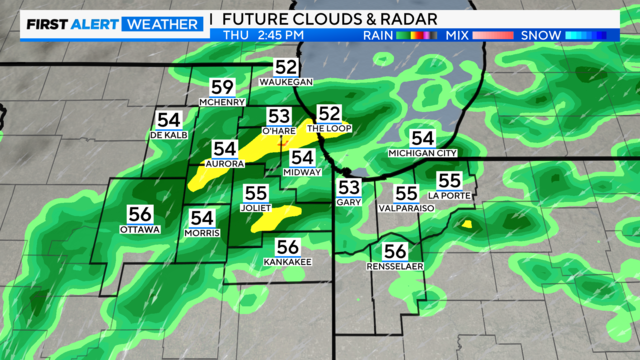
Following severe storms on Tuesday, Chicagoans are enjoying a nice break in the weather this Wednesday. But the next storm system is approaching quickly from the west.

CBS 2 News Chicago's weather forecast model — First Alert — helps digital users and traditional television viewers stay on top of Chicago's dynamic weather.
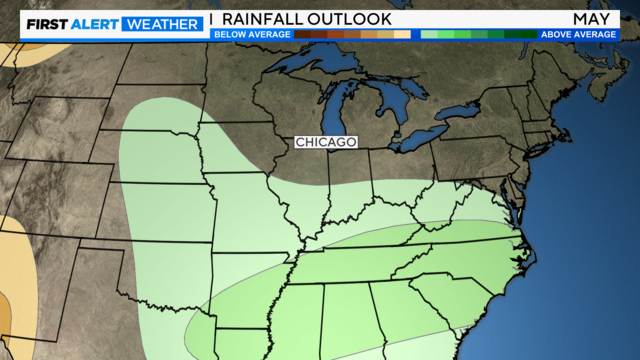
As the climate warms, May rainfall is getting heavier in Chicago.

Expert panel discussion centers the focus on the disparity that 1 in 3 victims of crime in Chicago is a Black woman
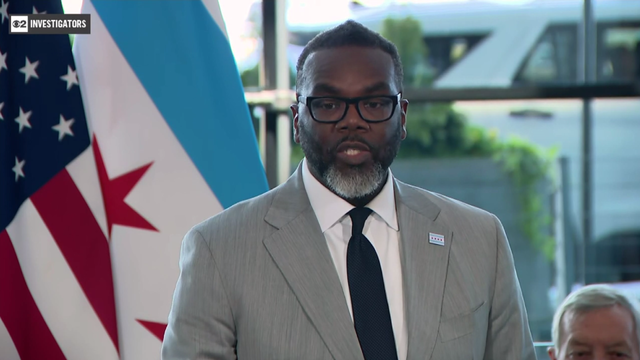
Police arrived at the scene sooner than if they had waited for the first 911 call.

Anthony Robinson's attorney said his previous defense lawyer failed to present evidence that showed it was physically impossible for him to be the shooter.
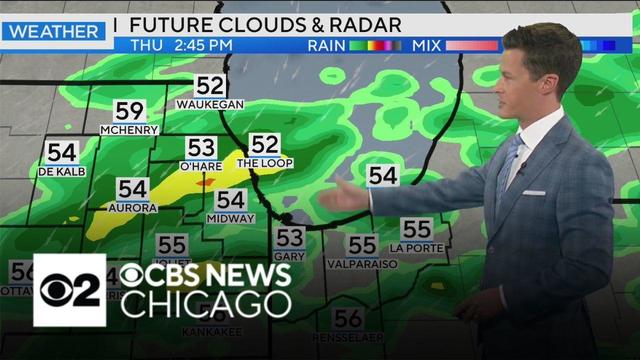
CBS 2 Meteorologist David Yeomans has a look at the extended forecast.
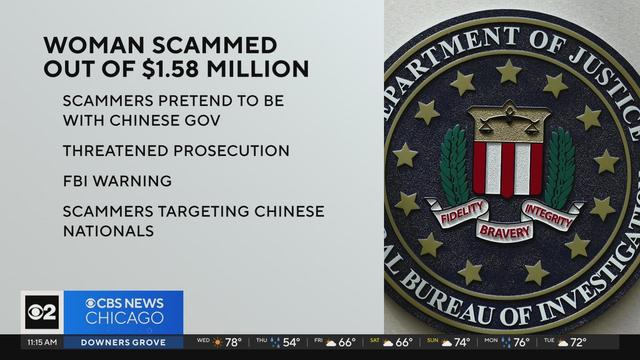
The 51-year-old was told to pay up or face criminal prosecution. She wired nearly $1.6 million to multiple accounts over the span of five months.

As two broods of cicadas prepare to emerge in Illinois over the next several weeks, some of the noisy insects have started showing up in northwest suburban Mount Prospect.
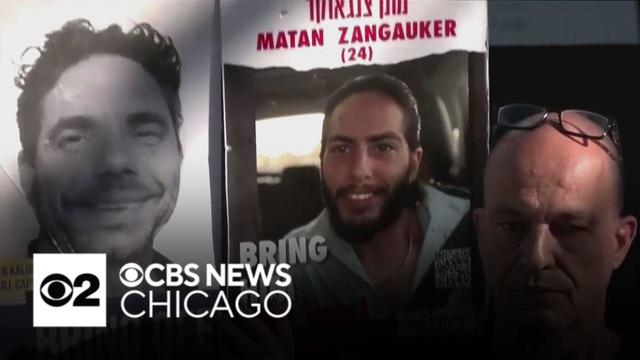
It's due to concerns Israel will drop the bombs on Rafah. It's the last Hamas stronghold in Gaza. But more than one million Palestinians are sheltering there from the war. CBS Correpondent Natalie Brand reports.
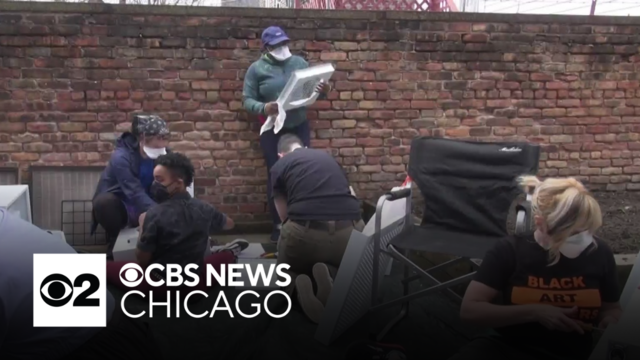
Their 12 purifiers have traveled across the city and even on international tours, making indoor art spaces safer, cleaner, and more accessible.

Marina Mabrey was gunning from deep and had a game-high 20 points.

The Cubs' Héctor Neris (2-0) pitched out of a jam in the ninth, when he retired Jackson Merrill on a pop fly with runners on first and second.
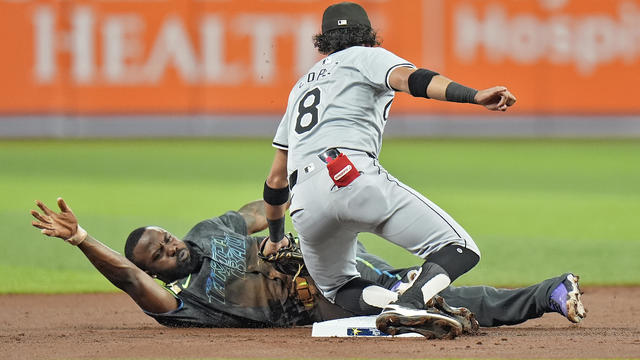
Zach Eflin allowed one run and six hits in seven innings as the Tampa Bay Rays beat the Chicago White Sox 5-1 for their fifth consecutive win.
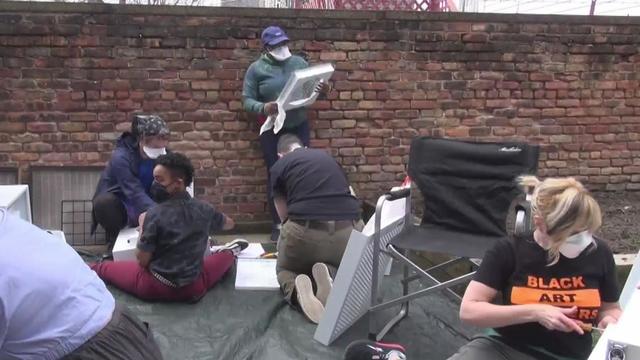
Emily Dupree founded the group after her partner caught COVID at a concert, even after wearing a mask.

Comfort Agboola received a Milken Educator Award in February for her exemplary work with students in the classroom at Poe Classical Elementary School in Pullman.

For the past three months, a cast of 10 Asian American/Pacific Islander comedians has been working on the new program, "Youth in Asia (Are You Proud of Me Yet?)"
Biden campaigned in the spot where Trump, to much fanfare, lauded a plan by Taiwan-based electronics giant Foxconn plan to build a $10 billion manufacturing facility that was supposed to eventually employ 10,000 people. Except it was never completed.

Stormy Daniels was called to the witness stand to testify at former President Donald Trump's trial in New York on Tuesday.
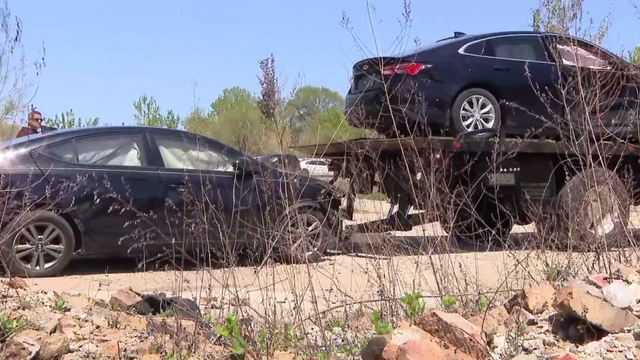
Alderpeople are looking to try to stop rogue towers from making thousands off drivers who thought they were signing their car away to someone they could trust.

The start date for former President Trump's classified documents trial was originally scheduled for May 20.

The lawsuit claims that the measure, signed into law by President Biden, is unconstitutional.
Alderpeople are looking to try to stop rogue towers from making thousands off drivers who thought they were signing their car away to someone they could trust.

Employees at dozens of now-closed Foxtrot Market and Dom's Kitchen stores, now jobless, wonder what comes next for them as their paychecks will soon end.
The family didn't get their cut of the estate sale, not hearing back from the salesman until CBS 2 got involved.
The Better Business Bureau warns that anyone buying an event ticket should watch out for fake ticket scams.

Financial records show Paul Croft and J.D. Frost raised about $30 million for a hydrogen plant that was supposed to be, at one point, in Indiana. It never existed, an attorney says.
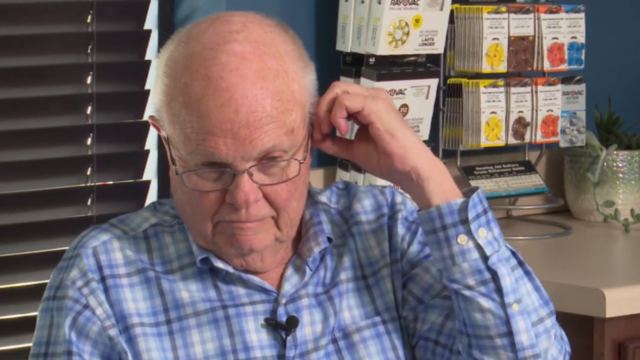
Researchers hope their findings will inspire action to make hearing aid devices more affordable since they can cost over $1,000 per ear.

First known HIV cases from a nonsterile injection for cosmetic reasons highlights the risk of unlicensed providers.
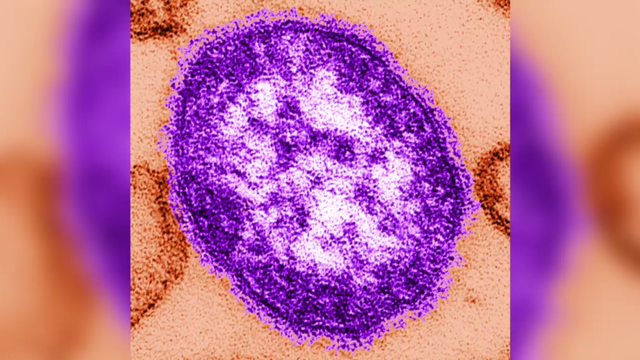
The city's measles dashboard said a total of 63 measles cases have been confirmed in Chicago this year, with one new case this week.

The department said anyone who visited the Sam's Club at 9400 S. Western Ave. in Evergreen Park one day last week may have been exposed to someone with measles.

Health officials are warning consumers not to consume Infinite Herbs basil sold at some Trader Joe's and Dierberg's stores after 12 people were sickened.
Biden campaigned in the spot where Trump, to much fanfare, lauded a plan by Taiwan-based electronics giant Foxconn plan to build a $10 billion manufacturing facility that was supposed to eventually employ 10,000 people. Except it was never completed.
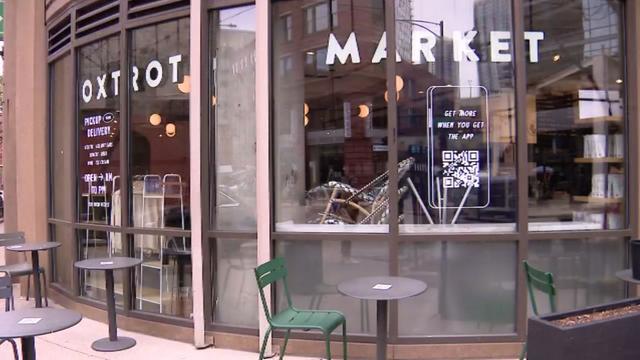
The Illinois Worker Adjustment and Retraining Notification (WARN) Act requires employers to notify workers of mass layoffs 60 days in advance.

Mayor Brandon Johnson denied that the Bears' shiny new dome could end up costing taxpayers a pretty penny.
Employees at dozens of now-closed Foxtrot Market and Dom's Kitchen stores, now jobless, wonder what comes next for them as their paychecks will soon end.

The company announced Tuesday that it received a stalking horse bid to purchase its operating assets.
Brian Fox, a fellow producer and engineer at Albini's Electrical Audio studio in Chicago, confirmed Albini passed away Tuesday night from a heart attack.
For the past three months, a cast of 10 Asian American/Pacific Islander comedians has been working on the new program, "Youth in Asia (Are You Proud of Me Yet?)"

The stars came out for the the 2024 Met Gala in New York City. See some of the most eye-catching outfits of the night.
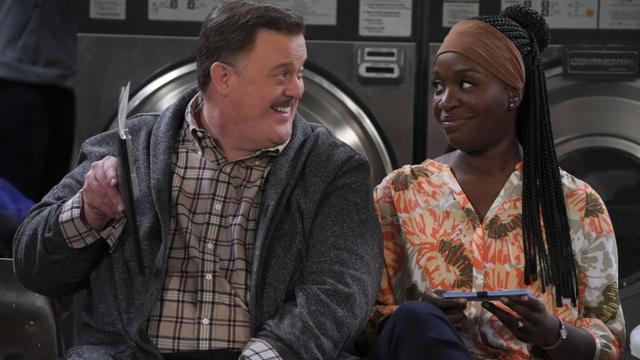
'Bob Hearts Abishola', the acclaimed comedy, is signing off after its fifth season on CBS.

Bernard Hill died Sunday at 79. The actor was known for his roles in "Lord of the Rings" and "Titanic."
CBS 2 Meteorologist David Yeomans has a look at the extended forecast.
The 51-year-old was told to pay up or face criminal prosecution. She wired nearly $1.6 million to multiple accounts over the span of five months.
As two broods of cicadas prepare to emerge in Illinois over the next several weeks, some of the noisy insects have started showing up in northwest suburban Mount Prospect.
It's due to concerns Israel will drop the bombs on Rafah. It's the last Hamas stronghold in Gaza. But more than one million Palestinians are sheltering there from the war. CBS Correpondent Natalie Brand reports.
Their 12 purifiers have traveled across the city and even on international tours, making indoor art spaces safer, cleaner, and more accessible.
"What is it going to take? He's a liability."
Because cicadas are temperature-dependent, their emergences may vary depending on the location.
Firefighters successfully rescued 24 sheep, 18 goats, one cow, and several chickens and ducks.
The cost of shelter is taking a bigger cut out of paychecks for many Americans, who are likely cutting back on basic necessities like food and child care, in order to cover rent.
Lake County Sheriff's Office said that around 8 a.m., deputies responded to Fairfield Road and Chardon Road, where a 2007 Nissan Versa and dump truck collided, causing major damage to both vehicles.
Expert panel discussion centers the focus on the disparity that 1 in 3 victims of crime in Chicago is a Black woman
Police arrived at the scene sooner than if they had waited for the first 911 call.
Anthony Robinson's attorney said his previous defense lawyer failed to present evidence that showed it was physically impossible for him to be the shooter.

The village board is working on a resolution to hire Lightfoot, a former federal prosecutor before her lone term as Chicago's mayor, to investigate claims Henyard has been misusing public funds.
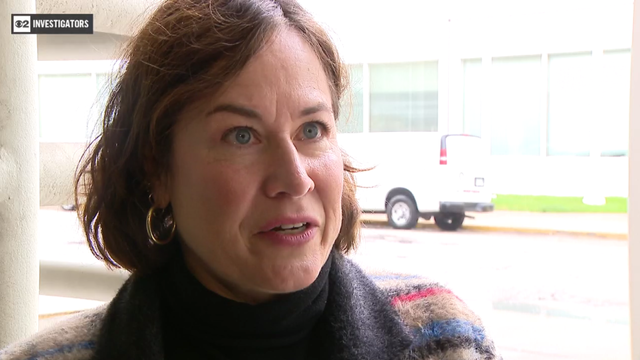
DCFS Director Heidi Mueller was asked Thursday why some kids in the system are being held in psychiatric hospitals longer than medically necessary.
Marina Mabrey was gunning from deep and had a game-high 20 points.
The Cubs' Héctor Neris (2-0) pitched out of a jam in the ninth, when he retired Jackson Merrill on a pop fly with runners on first and second.
Zach Eflin allowed one run and six hits in seven innings as the Tampa Bay Rays beat the Chicago White Sox 5-1 for their fifth consecutive win.

Going in, the Blackhawks had a 13.5% chance at scoring the first overall pick, even better than last year when they got the top pick to draft Connor Bedard.
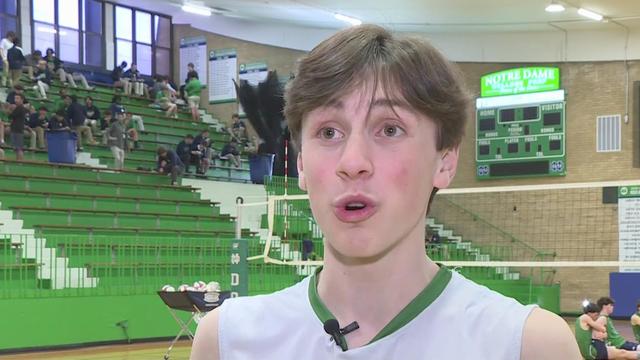
Caiden Frawley, a senior at Notre Dame College Prep's boy's volleyball team is doing more than just playing the game.
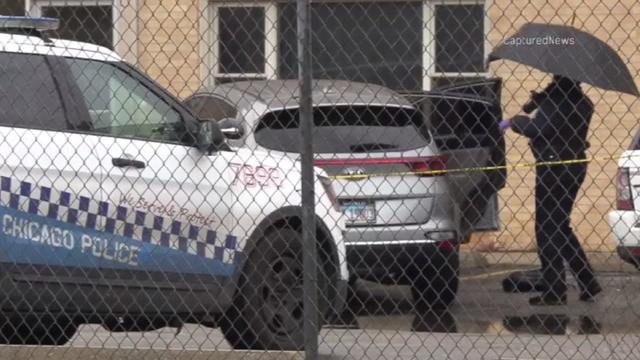
Police said a woman caught a 13-year-old girl and a 14-year-old boy trying to steal her, when the woman shot the girl in the shoulder.

Chicago Police detectives are asking anyone with additional photos or video to give them a call.

A new scathing lawsuit accused state employees of sexually abusing 95 people while they were children detained in Illinois detention facilities.

The girl was hit on the right side of her body. She was taken to Comer Children's Hospital, and her condition was stabilized, police said.

An Oswego family's two-year search to find out what happened to a missing man has ended, after Eddie Gardner's body was found in Chicago in March.